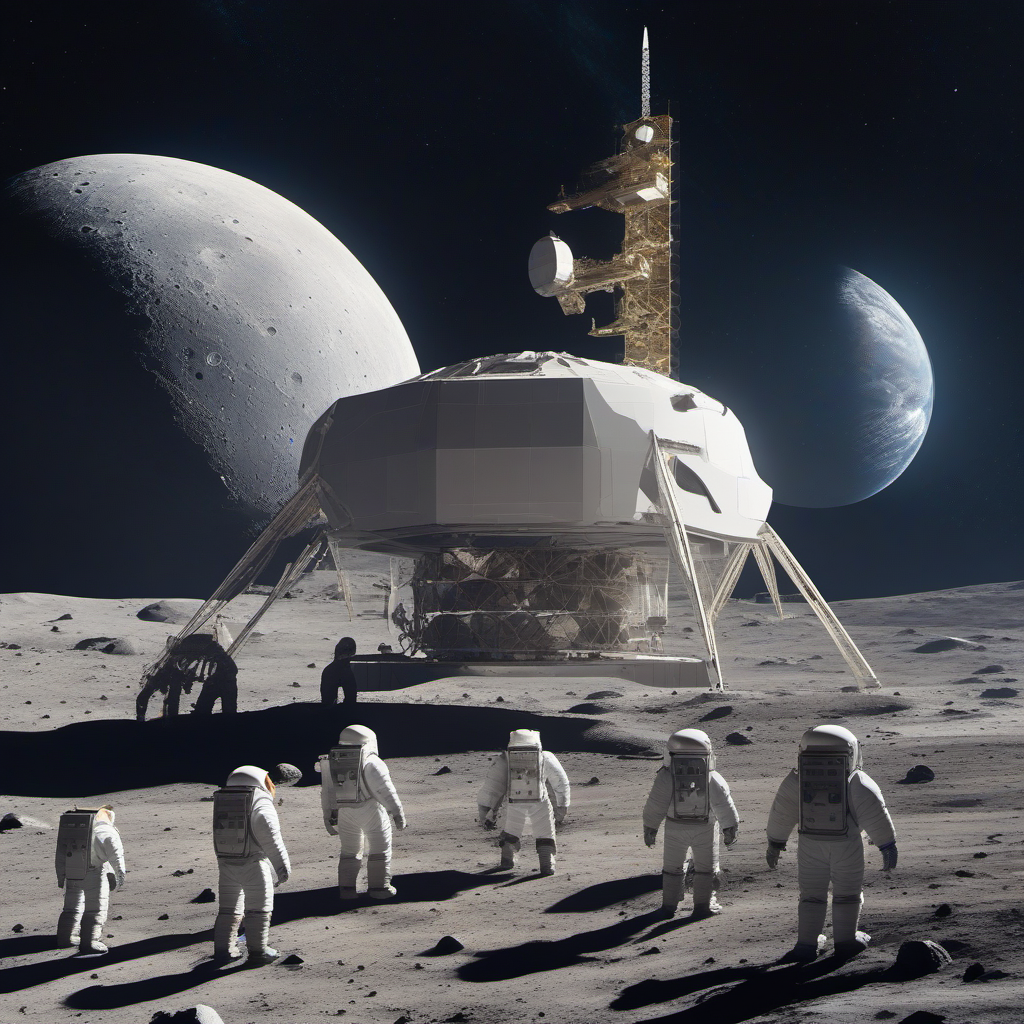
ICON, an Austin-based construction technology firm, has secured a $57.2 million contract from NASA to advance its lunar construction technologies. This funding aims to propel ICON’s capabilities in developing infrastructure systems for space, a continuation of its previous work under a Small Business Innovation Research (SBIR) dual-use contract with the U.S. Air Force. For Austin’s tech community, this contract underscores the region’s growing influence in the aerospace sector and its potential to shape future extraterrestrial construction.
## Building Beyond Earth
ICON specializes in 3D printing technology primarily used for constructing homes on Earth. The company’s Vulcan construction system has already been employed to build affordable housing units in Austin and other cities. With this NASA contract, ICON will adapt its terrestrial technology for lunar applications. The objective is to create structures that can withstand the harsh conditions of the moon and, eventually, Mars. This involves developing materials that can be sourced from the lunar surface, thereby reducing the need for costly transport from Earth.
ICON’s approach is based on leveraging in-situ resources, a strategy that could reduce the logistical challenges of space construction. The company aims to demonstrate that its technology can be a viable solution for building sustainable habitats on the moon, thus playing a crucial role in NASA’s long-term vision for a lunar base.
## The Competitive Landscape
ICON isn’t the only company eyeing extraterrestrial construction. Firms like Made In Space, now part of Redwire, and Blue Origin are also exploring space-based manufacturing and construction technologies. However, ICON’s focus on 3D printing for structural purposes sets it apart. While Made In Space has primarily concentrated on manufacturing small parts and tools in orbit, ICON is tackling the ambitious task of building entire habitats.
The $57.2 million NASA contract reinforces ICON’s position within this niche, but the competition is not far behind. Blue Origin, backed by Amazon’s Jeff Bezos, has invested heavily in its Blue Moon project, which includes plans for lunar landers and habitats. ICON’s ability to secure government contracts highlights its credibility and the trust placed in its technology. Nevertheless, the race to build on the moon is heating up, and ICON will need to continue innovating to maintain its edge.
## Implications for Austin and Beyond
For Austin’s tech scene, ICON’s contract with NASA is a testament to the city’s expanding role in space technology. It signals opportunities for local engineers and startups to engage with projects that extend beyond terrestrial bounds. This contract could also attract further investment into Austin’s tech ecosystem, encouraging more startups to pursue aerospace ventures.
Investors, particularly those focused on deep tech and aerospace, may find ICON’s progress an indicator of the sector’s viability and potential returns. With over $400 million in funding already raised, ICON demonstrates that substantial capital can be attracted to innovative projects in Austin.
For Texas-based founders, the success of companies like ICON serves as a reminder of the opportunities within the state to impact global industries. The contract with NASA not only enhances ICON’s reputation but also highlights Austin’s capacity to produce companies capable of tackling challenges on a cosmic scale.
The next steps for ICON involve rigorous testing and development of its lunar construction technologies. As the company progresses, Austin’s tech community will be watching closely, aware that successful execution could not only redefine extraterrestrial construction but also further cement the city’s reputation as a hub for cutting-edge innovation. For an Austin founder, the message is clear: the sky is no longer the limit.