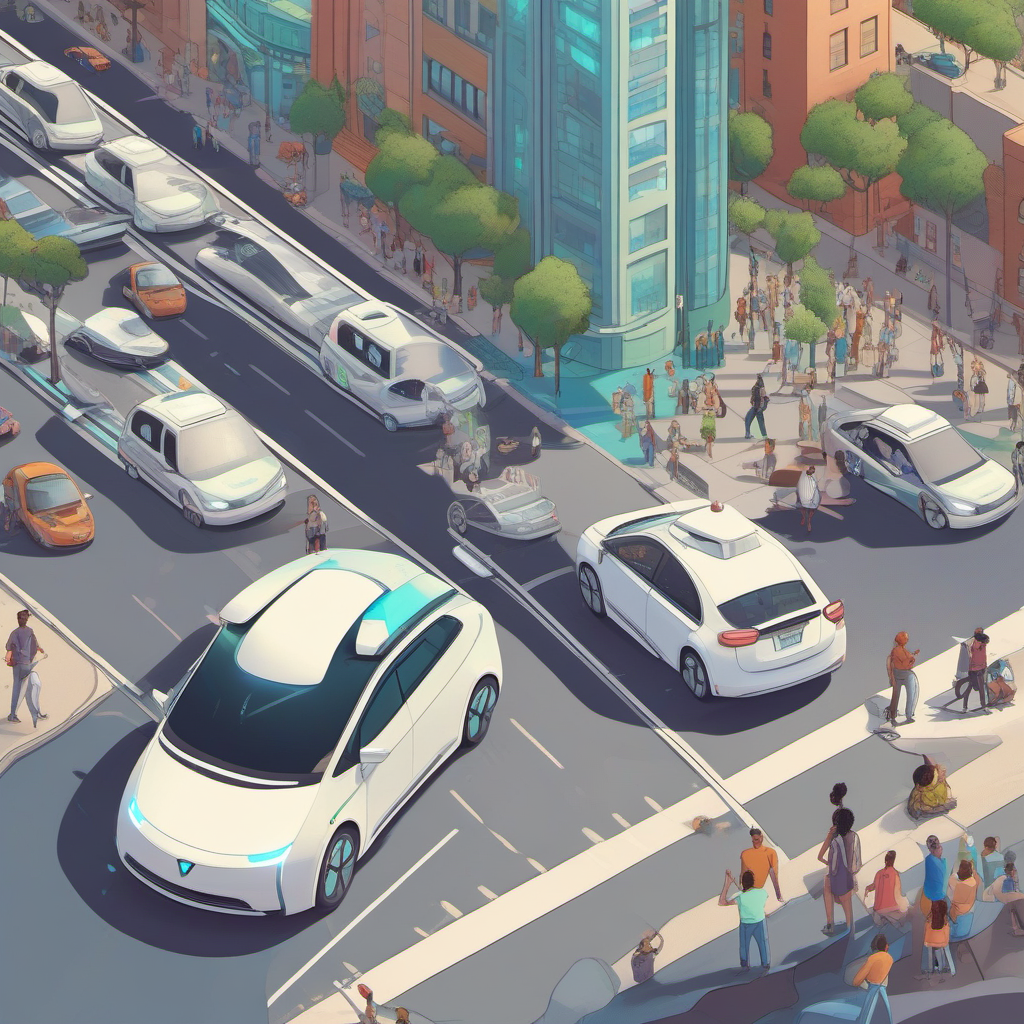
Waymo, the self-driving technology company under Alphabet Inc., is slated to launch its robotaxi service in Austin, marking its fourth commercial market following Phoenix, San Francisco, and Los Angeles. This expansion is pivotal as it places Waymo in direct competition with Cruise, another prominent player in the autonomous vehicle space. The initial phase of Waymo’s operations in Austin is set to commence this fall, a move that could reshape local transportation dynamics.
## What Waymo’s Robotaxi Service Entails
Waymo’s robotaxi service is designed to offer passengers an autonomous ride-hailing experience where vehicles operate without a human driver. Utilizing a combination of sophisticated sensors, machine learning algorithms, and real-time data processing, Waymo aims to provide a seamless and safe transportation option. Austin residents can expect the service to function similarly to traditional ride-hailing apps, allowing users to request rides through Waymo’s app interface. The company has been refining its technology over the years in various cities, aiming to ensure reliability and safety.
The integration of Waymo’s service into Austin’s transportation ecosystem is expected to offer a new layer of convenience to consumers. However, the real-world value for consumers remains to be seen, particularly if issues such as cost, availability, and reliability are not addressed adequately. Waymo’s service is likely to be launched in specific areas of the city initially, with plans for broader coverage as the technology and infrastructure mature.
## Competitive Context in the Autonomous Vehicle Space
Waymo’s entry into Austin pits it against Cruise, a major competitor also testing and deploying autonomous vehicles in urban environments. Cruise, backed by General Motors, has been operating in several U.S. cities and recently ramped up its own efforts in Texas. Both companies are vying for dominance in the burgeoning autonomous transportation market, which promises substantial long-term rewards but requires overcoming significant technological and regulatory hurdles.
While Waymo has the advantage of being a subsidiary of Alphabet, granting it access to substantial resources and technological expertise, Cruise benefits from its automotive manufacturing backing. The competitive landscape in Austin will likely intensify as both companies seek to secure partnerships with local businesses and city officials. For now, the question remains whether Waymo or Cruise can achieve the operational scale and consumer trust necessary to become a staple of urban transportation.
## Implications for Austin and Texas Stakeholders
Waymo’s expansion into Austin holds several implications for local founders, engineers, and investors. For engineers, the presence of a leading autonomous vehicle company could translate to new job opportunities and collaborations, fostering a hub of innovation in mobility technologies. Local startups may find opportunities to integrate their solutions with Waymo’s platform or explore ancillary services like vehicle maintenance and data analytics.
Investors in Texas have a chance to engage with a sector that, while still nascent, is poised for substantial growth. The development of autonomous vehicle technology in Austin could drive interest in related tech sectors such as AI, machine learning, and IoT, broadening the scope for investment opportunities. However, prudent investors will need to assess the viability and scalability of these technologies amidst evolving regulations and public acceptance.
Waymo’s move also signals a potential shift in urban planning and infrastructure development as city officials adapt to accommodate autonomous vehicles. This will require a collaborative approach, balancing innovation with public safety and accessibility.
As Waymo gears up to launch its service in Austin this fall, the focus will be on how effectively the company can integrate into the city’s existing transportation framework and address consumer needs. For an Austin founder, this development could mean exploring synergies with autonomous vehicle technologies or considering the impact of such advancements on their own business model and market dynamics.