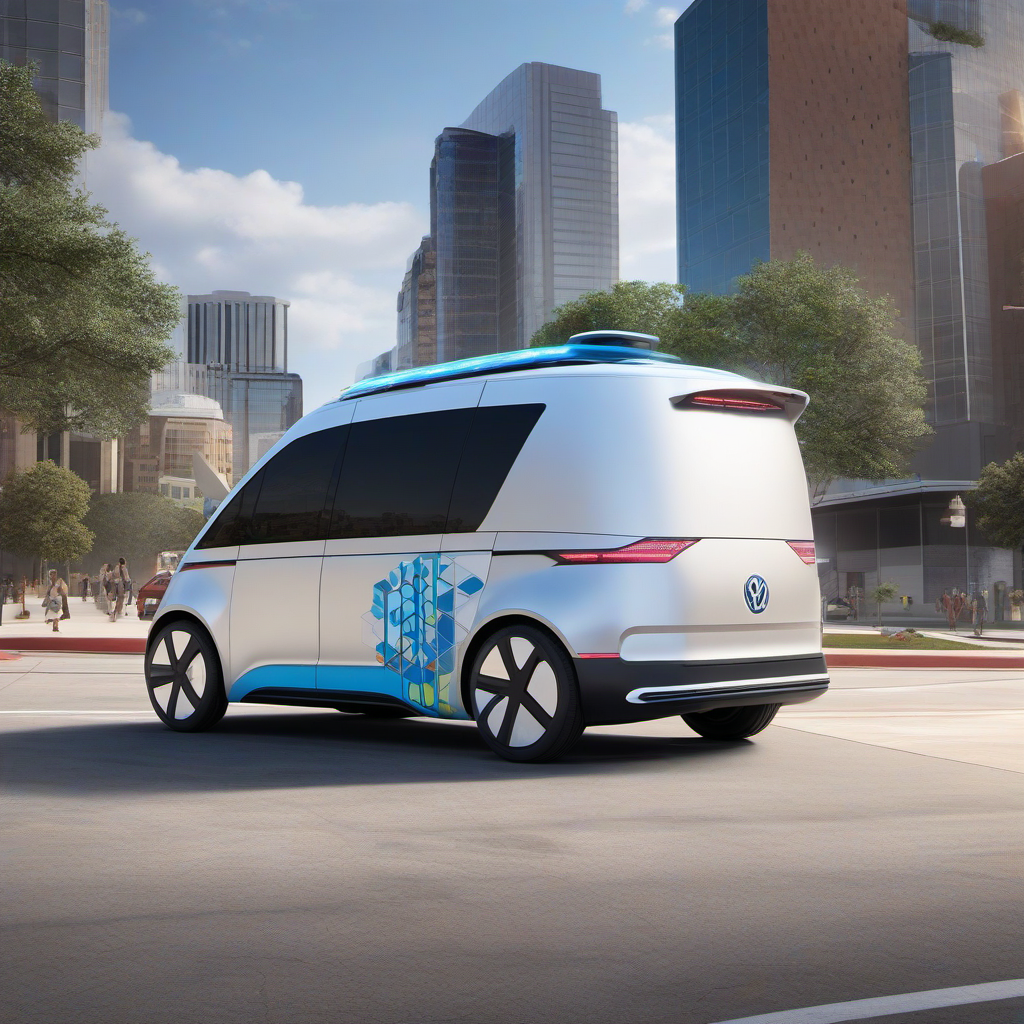
Volkswagen has initiated testing of its self-driving ID Buzz vans in Austin, marking a strategic move into autonomous vehicle technology. This pilot program, featuring 10 all-electric ID Buzz vehicles, is part of Volkswagen’s collaboration with Mobileye. As Austin continues to establish itself as a tech hub, this venture could influence the local landscape of self-driving technology development and deployment.
## What Volkswagen’s Self-Driving Fleet Does
Volkswagen’s self-driving ID Buzz vans are equipped with Mobileye’s advanced autonomous driving technology. Mobileye, a subsidiary of Intel, provides the systems that allow these vehicles to navigate urban environments with minimal human intervention. The ID Buzz, an electric tribute to the classic VW Microbus, is designed to serve as both a commercial and personal vehicle, combining nostalgia with modern tech.
This fleet is primarily aimed at testing and refining Volkswagen’s autonomous driving capabilities in real-world conditions. The choice of Austin as a testing ground is strategic, given the city’s varied traffic scenarios and its openness to technological experimentation. The goal is to eventually integrate these vehicles into a broader transportation network, potentially including ride-sharing services.
## Competitive Context in Autonomous Vehicles
The autonomous vehicle sector is crowded and competitive, with heavyweights like Tesla, Waymo, and Cruise leading the charge. Volkswagen’s entry into this space highlights its commitment to not just electric vehicles, but also to autonomy. Unlike some competitors who focus on private ownership, Volkswagen seems to be eyeing commercial applications, potentially in logistics and public transportation.
The collapse of Argo AI, once a promising autonomous vehicle startup backed by both Volkswagen and Ford, underscored the challenges in this sector. The decision to test in Austin could be seen as a way for Volkswagen to rebound from this setback by leveraging Mobileye’s established technology. However, skepticism remains regarding consumer readiness and regulatory frameworks, which are still evolving.
## Implications for Austin and Texas Tech Ecosystem
For Austin-based founders and engineers, Volkswagen’s initiative could present both opportunities and challenges. The presence of a major automotive player testing autonomous vehicles locally might spur innovation and partnerships. Local startups could find opportunities in developing complementary technologies or services that integrate with autonomous systems.
Investors in the region might view this as a signal to pay closer attention to mobility and autonomous tech startups. However, the real consumer value of self-driving vehicles remains to be fully realized, particularly in terms of safety and cost-effectiveness. As such, careful evaluation of market readiness and technological maturity is crucial.
The testing also underscores Austin’s growing reputation as a tech epicenter, potentially attracting more such initiatives. It reinforces the city’s status as a place where new technologies are not just developed but also tested in real-world conditions.
## What Comes Next
Volkswagen plans to continue its testing phase in Austin over the coming months, gathering data and refining its systems. The outcomes of these tests will likely influence the company’s broader autonomous vehicle strategy, including potential commercial deployments. For an Austin founder or engineer, keeping an eye on Volkswagen’s progress could reveal emerging trends and opportunities in the autonomous vehicle landscape. As the city becomes a proving ground for such technologies, being at the forefront of this shift could yield substantial rewards.